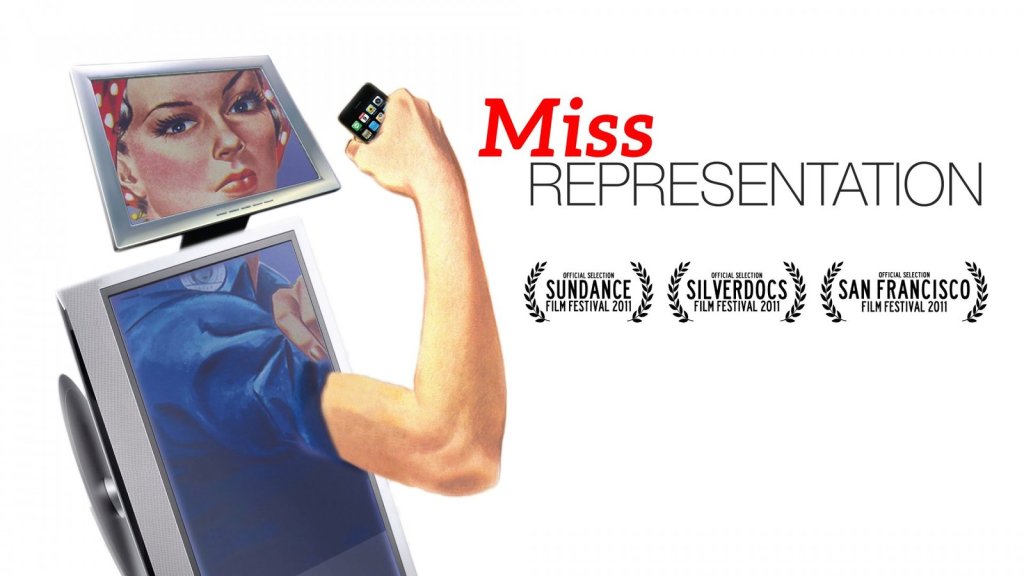
Jennifer Siebel Newsom’s 2011 documentary Miss Representation takes a close look at the role of women in media – both in films and television, but also their portrayal in the news and in politics. One area of the documentary stood out to me in particular – the section in which we see a montage play of all the major blockbusters of the 21st century – predominantly filled by males in the lead roles, with women taking a back seat as the love interest or “damsels in distress”. Films such as The Hangover, The Bourne Identity, James Bond and American Pie flash across the screen, most of which can be broken into two categories – testosterone-driven action flicks, or comedies where the main goal of the protagonist involves having sex with the one-dimensional, female side character (who usually spends at least one scene walking in slow motion, wearing skimpy clothing, specifically for the male cinema-goers).
After finishing the documentary, I found myself most interested in examining how the landscape has changed in the eight since its release. We have begun to notice a minor change in Hollywood’s blockbusters, as well as there being more female-led comedies. 2017 saw the release of Wonder Woman, with Gal Gadot portraying the Amazon warrior in the first ever female led superhero film. This was of course followed by Captain Marvel in 2019, the first of over twenty Marvel films to feature a female in the title role. Even Black Widow, a member of the Marvel universe since 2010, will finally be getting her own starring role in 2020’s Black Widow, with Scarlett Johannsson returning to portray the character for the eighth time. Outside of the superhero genre, we’ve also seen a number of female-led reboots in recent years. 2016 had Ghostbusters, and 2018 saw the release of Ocean’s 8, both featuring female ensembles. Just earlier this year saw the release of the Anne Hathaway / Rebel Wilson film The Hustle, a reboot of the 1988 film Dirty Rotten Scoundrels.
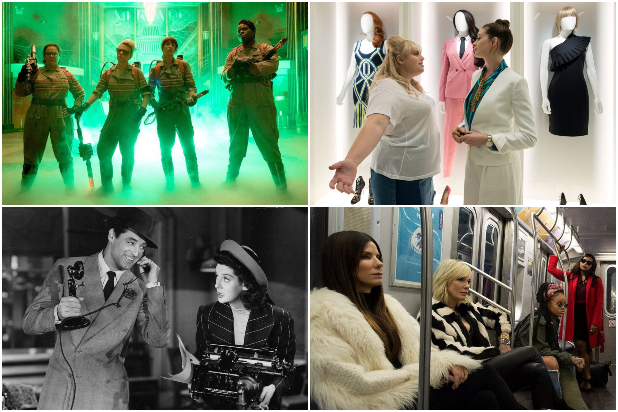
Despite the fact this could represent a positive change in Hollywood, many critics disagree with this manner of film production. The vitriolic misogynist backlash Ghostbusters incurred aside, there could be a very real problem with simply remaking classic films with female stars. As noted by journalist Emily Spiers, these films “demonstrate the film and television industry’s cynical profiteering from contemporary feminist ideals”. Instead of coming up with new and fresh ideas for women-driven blockbusters, Hollywood seems insistent on simply repackaging successful male-led films of the past and labeling them as “feminist”. But, as Spiers so succinctly puts it – “just because the films and TV shows feature predominantly women, or a female protagonist, it does not mean that they are feminist”. It could be said that Hollywood is simply releasing these types of films to appear on the “right side” of mainstream media, but doesn’t actually care enough to put in the work and make new, fresh and original films for women.
Perhaps an even more relevant issue lies in those working behind the camera. The directors of Ghostbusters, Ocean’s 8, and The Hustle were Paul Feig, Gary Ross, and Chris Addison respectfully. Indeed, according to a study published earlier this year, only 5 of the 112 directors hired across the top 112 films of 2018 were female, and only 3 composers were female. If Hollywood really cared about female representation in the film industry, they surely should be making changes to the production crews as well. As it currently stands, it simply feels as if they are trying to capitalize on the MeToo climate of the entertainment industry without working to fix these major representation issues. Geena Davis states within the documentary – “All of Hollywood is run on one assumption: That women will watch stories about men, but men won’t watch stories about women.” It’s about time that producers, executives, and those with power within the industry work to change this.
These films pay lip service to feminism by featuring more women, while continuing to tell the same old lucrative stories with the same values.
– Emily Spiers
Works Cited
1. Siebel Newsom, Jennifer. Miss Representation. 2011.
2. Spiers, Emily. We should stop making all-female reboots of old films and superhero classics. Here’s why. Independent, 13th October 2018. – https://www.independent.co.uk/voices/female-reboot-movies-women-ghostbusters-oceans-8-superheroes-feminism-a8582426.html
3. L. Smith, Stacy. Inequality in 1,200 Popular Films: Examining Portrayals of Gender, Race/Ethnicity, LGBTQ & Disability from 2007 to 2018. Choueiti, Mark; Pieper, Katherine; Yao, Kevin; Case, Ariana; Choi Angel, Annenberg Inclusion Initiative, September 2019. – http://assets.uscannenberg.org/docs/aii-inequality-report-2019-09-03.pdf

 BlindFireworks