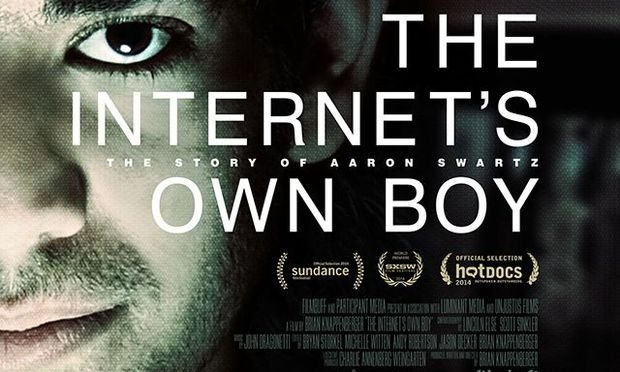
The 2014 documentary The Internet’s Own Boy: The Story of Aaron Swartz, examines Swartz’s life, from his childhood to his entrepreneurial ventures, to finally his online activism and campaigning. Swartz, who is most prominently known for co-founding the news and entertainment website Reddit, was particularly interested in the freedom of information and lack of governmental interference with the free internet. While the film is mostly focused on simply taking us on a journey through Swartz’s life, I found myself most interested in the short sequence towards the end of the film in which Swartz is largely responsible for the stopping of SOPA.
In the early months of 2012, a bill known as SOPA (Stop Online Piracy Act), was making its way through congress and was almost guaranteed to pass. This bill, if successful, would have been detrimental to free speech and privacy on the internet, and could have potentially brought an end to the domain-based system we have been using for around twenty years. Only 31 out of a total 111 senators in congress opposed the bill, and it was immediately seen to be dangerous as it would give the United States government the freedom to shut down any website accused of violating copyright.
It makes everyone who runs a website into a policeman, and if they don’t do their job of making sure nobody on their site uses it for anything that’s even potentially illegal, the entire site can get shut down without even so much as a trial.
– Aaron Swartz
After hearing about this proposed bill from his friend Peter Eckersley, Swartz was able to help fight back against the bill, which as stated by Senator Ron Wyden posed a “serious threat to speech and civil liberties”, topics which Swartz cared passionately about. Swartz arranged a meeting with a representative of one of the senators supporting the bill, which concluded with the representative stating that they would break the internet if they had to. To combat this, Swartz started a new organisation called Demand Progress – a simple website designed to explain the problem in its simplest form, and give citizens the ability to easily contact congress and protest the bill. The site attracted millions of supporters, and suddenly opinion within congress changed. The bill didn’t pass, and Swartz is largely to thank for that.
Instead of a decline in illicit consumption, the perceived threat that the legislation posed … has instead appeared to galvanize sections of the public and from this they have mobilized numerous protest actions.
– Robert Jewitt
Jewitt sums it up expertly in the above statement – the introduction of bills such as SOPA does nothing but incite the public and regular citizens into action in order to protect the basic freedoms of the internet. It is also important to note here as well how massive internet webpages such as Wikipedia, Reddit, and Craigslist “went dark” in support of the protests, and countless actors and celebrities tweeted and voiced their concerns to congress. As stated by Nadine Bloch in an article for Waging Nonviolence, “this tactic of going dark is so compelling because it paints a graphic picture of how things might be if we each don’t stand up and say no”. These efforts, however, all took place after the massive awareness and publicity campaign was launched by Demand Progress – with Swartz at the forefront.
The film itself is quite clearly on the side of Aaron in stopping SOPA. It paints the senators who supported the bill as villains from the outset – showing clips of John Stewart ridiculing them, describing the current state of congress as “the dark ages”, and stating that this bill was in complete opposition of free speech. It also portrays Swartz and the other protesters as the underdogs, highlighting how difficult it is to fight against congress, and showcasing repeatedly how many senators and people in positions of power stood in their way. I, myself, believe Aaron and the other protestors to be in the right here, and am incredibly grateful for all he has done in support of online freedom and the protection of free speech on the internet.
Works Cited:
1. Knappenberger, Brian. The Internet’s Own Boy: The Story of Aaron Swartz, 2014.
2. Jewitt, Robert. Consuming the illegal: Situating piracy in everyday experience. Yar, Majid, Convergence: The International Journal of Research into New Media Technologies, 2013.
3. Bloch, Nadine. The day Aaron Swartz helped make the Internet go dark. Waging Nonviolence, 18th January 2013. – https://wagingnonviolence.org/2013/01/the-day-aaron-swartz-helped-make-the-internet-go-dark/

 BlindFireworks