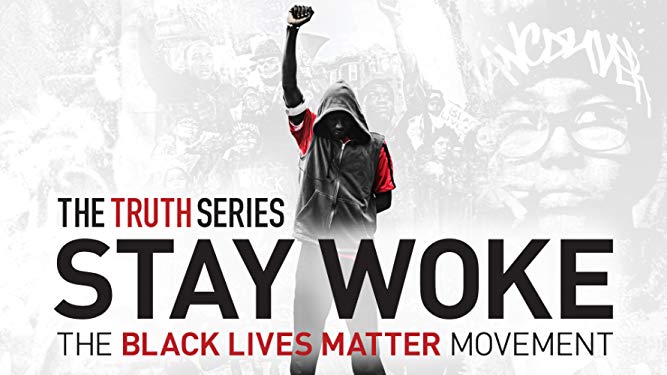
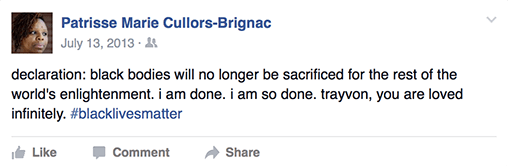
The opening scene of Stay Woke: The Black Lives Matter Movement is haunting in its simplicity. It is an audio recording of the call that George Zimmerman made to police shortly before shooting and killing 17-year old Trayvon Martin in February 2012. This opening scene is a hugely effective establishment of tone, immediately making those unfamiliar with the situation feel the gravity, weight, and importance of the movement. The movement itself started from a Facebook post made by Alicia Garza – “black people. I love you. I love us. Our lives matter.” This post was followed up by another from Patrisse Cullors, which she finished with “#blacklivesmatter”. From something as simple as two Facebook posts, an entire movement was born.
As noted by Zeynep Tufekci, “social media allowed the movement to take local events, like a police killing in Ferguson, and make them nationally salient.” This is what the film seeks to convey to us, and it does so incredibly effectively. It places tweets on screen constantly, through the rise of the movement right through to the criticism they faced through the years following their formation. The tweets and status updates show on screen at key moments for the movement – during the Ferguson riots, following the eulogies for Michael Brown, and during the campaign against the movement. We, as the viewer, get to see the thoughts, opinions, and actions of those part of the movement as they happen, and it aids in our understanding of how this movement was able to gain so many supporters as quickly as it did. In an interview with Nelly, the rapper states that “it happened via social media”. This is perhaps the biggest and most famous example of how a group of people rallied together by using the internet and social media platforms in order to enact change and demand justice.
The documentary film is, on the whole, presented clearly and with a lack of flair, however, it makes effective use of its opening scenes in order to gain the viewers support for the movement. For example, in the sequence in which Zimmerman is found innocent, the camera lingers on his and his lawyers faces, as they smile and hug each other, as if they are reveling in the death of the young boy he killed. It is intercut with clips of black people reacting and watching the footage, many of whom are in tears because of the injustice and lack of punishment for Zimmerman. The film, however, makes sure to also show the movement’s own shortcomings and failures. It shows a news clip of a group of members calling for the deaths and killing of white police officers, something which the founders and leaders of the group vehemently oppose. However, those seeking to put down and stop the movement brought up this incident repeatedly, despite the fact that the rest of the movement disavowed and distanced themselves from these actions. The film does not shy away from showing these incidents, but rather shows them and shows how the movement rose to move past them.
On the whole, despite the conventional format of the documentary, I found it effective in conveying the origin and intention of the Black Lives Matter movement, and how the internet and social media were integral to its formation and successes.
Works Cited:
1. Grant, Laurens. Stay Woke: The Black Lives Matter Movement. 2016.
2. Tufekci, Zeynep. Twitter and Teargas: The Power and Fragility of Networked Protest, Yale University Press, 2017.

 BlindFireworks